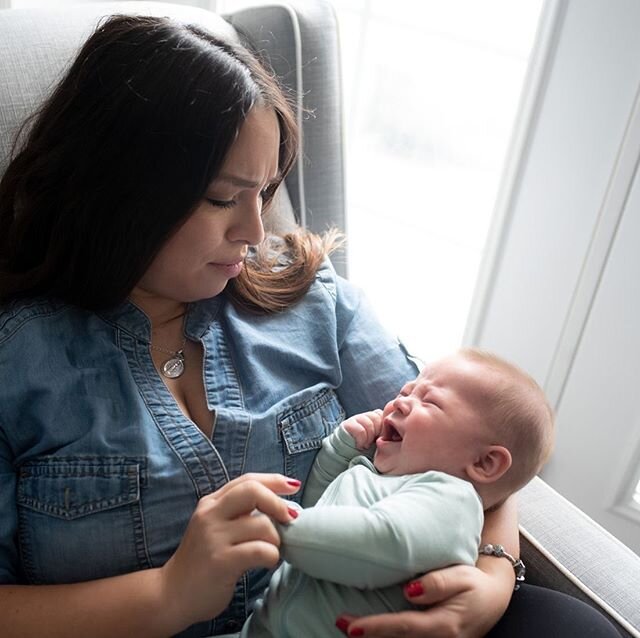
It’s 9 PM. You’re bouncing a screaming infant in a dark room, your own eyes burning with exhaustion. You find yourself whispering to the shadows, "You are literally exhausted... why won't you just close your eyes and sleep?!"
It’s the ultimate parenting paradox: If a baby is tired, they should sleep, right? Wrong. If you’ve ever missed a sleep window and found yourself wrestling a "fussy, whiny, grumpy" tiny human who seems to have developed super-human strength, you’ve met the Overtired Monster. It isn't fun, and it isn't your fault. But understanding the science behind it can change your nights forever.
The Science of the "Second Wind"
You might think an overtired baby is just being difficult, but it’s actually a chemical survival response.
Babies have narrow biological sleep windows. When we miss that window, the brain thinks, "Oh, I guess we're staying awake for a reason!" To help the baby stay alert, the body floods the system with cortisol and adrenaline. Think of the last time you stayed up way past your bedtime. You were foggy and grumpy, but then suddenly, you felt "wired." You were exhausted, yet your heart was racing. That is exactly what’s happening to your baby. They aren't just crying; they are physically vibrating with stress hormones that make it nearly impossible to drift off.
The Result: This creates a vicious cycle. Overtired babies have a harder time falling asleep, wake up more frequently at night, and take shorter "catnaps." Many babies labeled as “colic” are actually just caught in this overtired loop.
The Transition: Sleepy Cues vs. Wake Windows
The biggest mistake parents make is using the same strategy for a 6-week-old as they do for a 6-month-old. To fix the overtired cycle, you have to know which "phase" you’re in.
Phase 1: Under 12 Weeks (The "Cue" Phase)
At this age, a newborn’s internal clock is still under construction. They don't have a rhythm yet, so they communicate through Sleepy Cues. * The Goal: Watch for the glazed eyes, the ear-tugging, or the first yawn.
The Action: Put them down immediately. You have a very short grace period before they hit the "overtired zone." In the newborn stage, sleepy cues are your salvation.
Phase 2: Over 12 Weeks (The "Window" Phase)
By 4 months, things change. Suddenly, your baby is interested in the world. They might be exhausted, but that colorful toy or the dog barking is far too interesting to let them show it.
The Trap: If you wait for a 5-month-old to rub their eyes, you might already be too late.
The Solution: Wake Windows. Following a set schedule based on how long they’ve been awake becomes more reliable than waiting for them to "look" tired.
It’s a Dance (Literally)
Finding the sweet spot between "not tired enough" and "overtired" is an art form.
If you have a 6-month-old who rubs their eyes after only an hour, putting them down too soon might result in a 20-minute nap because they haven't built up enough "sleep pressure." You want to gently push them toward their ideal wake window without letting them fall over the overtired cliff.
Sometimes, you have to get creative to keep them awake for those last 15 minutes. I’ve literally had to do a full-blown kitchen dance routine just to distract a baby until their window opened. It’s a balancing act:
If they are bored: Change the scenery or do a "dance" to hit that window.
If they are hitting the "cliff": Shorten the next window by 10–15 minutes.
Stop the Cycle Today
You don't have to navigate the "second wind" alone. If your days feel like a constant battle against the clock and your nights are spent wondering where it all went wrong, let’s chat.
Ready to reclaim your evenings? [Book your free call today] and let’s get your baby (and you!) the rest you deserve.