If you’ve got kids, you’ve probably maxed out every sick day—and you may have spent the last few weeks cooped up at home, chasing after little ones who keep trading one germ moment for the next.
Cue the cabin fever, the frustration, and the kind of exhaustion that sinks in deep. Daycare and school are basically germ factories, and it can feel like every virus is circling your child’s hands. Now everyone’s sick, and you’re left wondering, what happens to sleep when a little one is under the weather?
If this sounds familiar, you’re not alone. It’s that time of year, and no amount of hand sanitizer seems to outsmart the germs.
But what about sleep when illness hits? You’ve got a sick baby on your hands, and a fresh worry looms:
What will this do to their sleep?
You had them on a good schedule. They were sleeping independently. Things were finally manageable.
Take a breath. It will be okay.
A baby who knows how to sleep can bounce back. Illness doesn’t erase their knowledge of how to put themselves to sleep, even if they’re temporarily thrown off by a cold or fever.
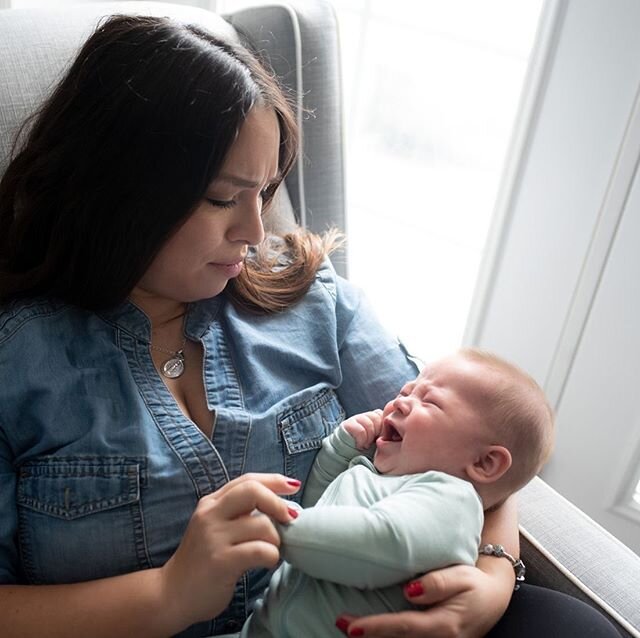
Yes, sick babies may wake more. Naps might be off. And yes, it can feel scary. But just like adults, when babies are sick, they feel awful. They may need more comfort, and giving them that comfort won’t ruin sleep in the long run.
Sleep During Illness: Do’s and Don’ts
Do:
Follow your instincts. If your baby needs you, respond—hold them, cuddle them, keep them comfortable, and offer reassurance in the crib if possible. Start with light comfort and escalate only as needed. You don’t always have to go straight into assistance to sleep.
Let them sleep more. Extra rest supports healing. Night sleep is especially valuable for rebuilding the immune system during deep sleep. It’s okay if naps stretch a bit—just don’t let the day stretch into all-day snooze-fests or your nights will suffer.
Prioritize daytime sleep wisely. If days get long and nights become rough (early wakeups, more frequent night wakes, or long middle-of-the-night awakenings), gently trim daytime naps. Day sleep shouldn’t replace night sleep.
Keep their sleep space familiar. If you can avoid moving them out of the bed or crib, do. Babies sleep best in familiar places, even when sick. If you need proximity, it’s okay for a parent to sleep on the floor beside the crib for a night or two—later you can return to your own bed.
Trust your gut. If your baby has a sniffle but seems mostly content and is sleeping okay, you don’t always need to rush in. Sometimes a quick monitor check is enough. If something feels off, you know your baby best and can definitely check in.
Don’t:
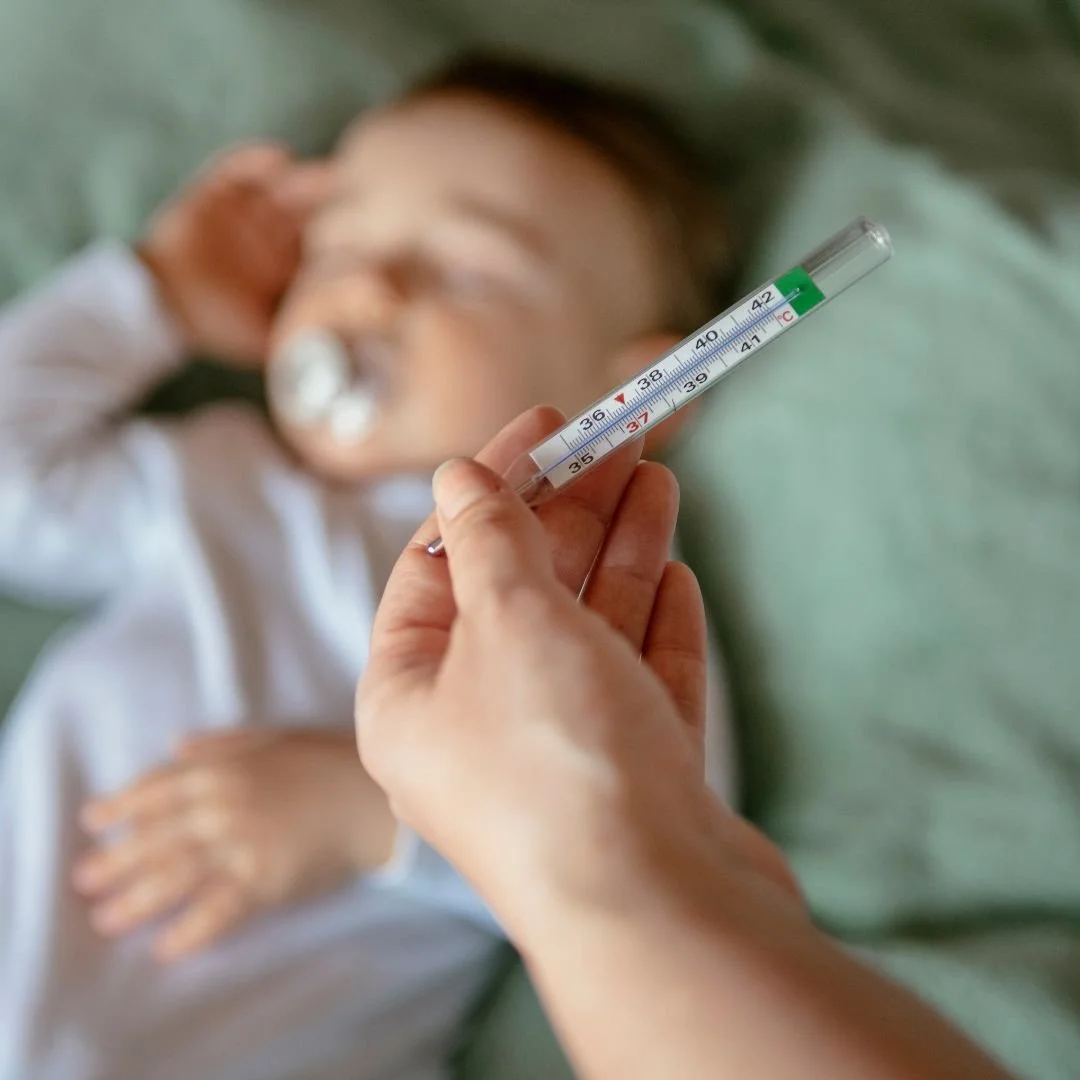
Don’t assume it’s teething. Teething rarely causes high fevers, prolonged sleep disruption, diarrhea, or nighttime-only pain. If a fever is present, if they seem uncomfortable, or if sleep is severely disrupted, consult your doctor. Teething myths are common, but fever isn’t typical teething territory.
If your baby already struggled with sleep before getting sick (frequent night wakings, short naps, or needing lots of help to fall asleep), you can make changes—just wait until they’re fully better. Once they’re back to health, it’s a great time to revisit and work on getting them better sleep.
If you’d like help tailoring a plan for your family, book a call with me and we’ll map out steps that fit your family and your little one’s needs.
A quick bottom line: Wiping runny noses is temporary. Great sleep strengthens their recovery and helps them rebound faster. Prioritize consistent sleep, especially during illness, and trust that with a little comfort and routine, they can still settle themselves to sleep—even through sickness.
Disclaimer: This is not medical advice. If your baby is unwell, always consult your family doctor for guidance.